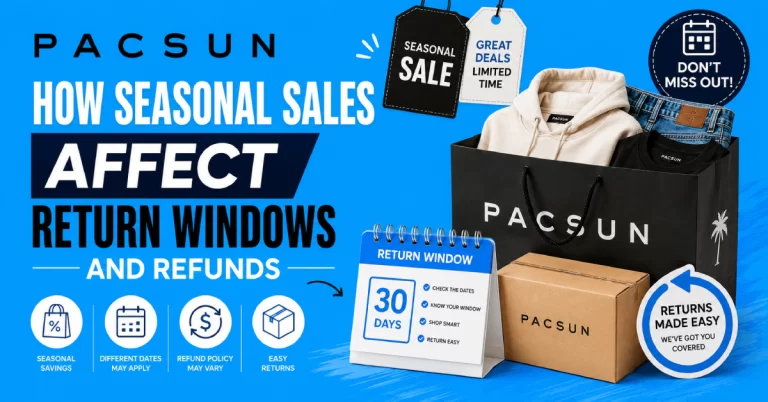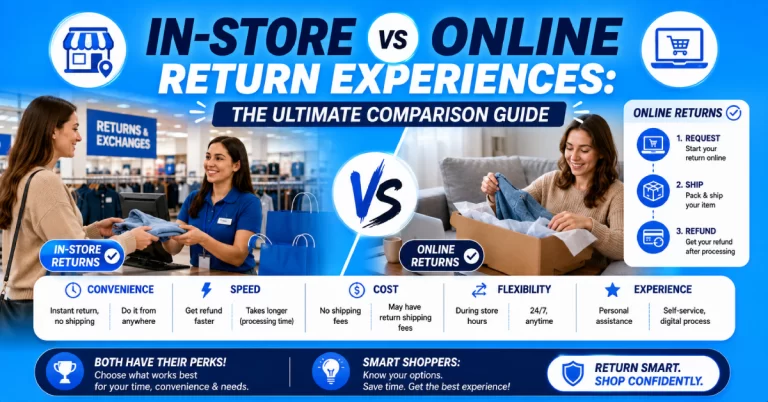
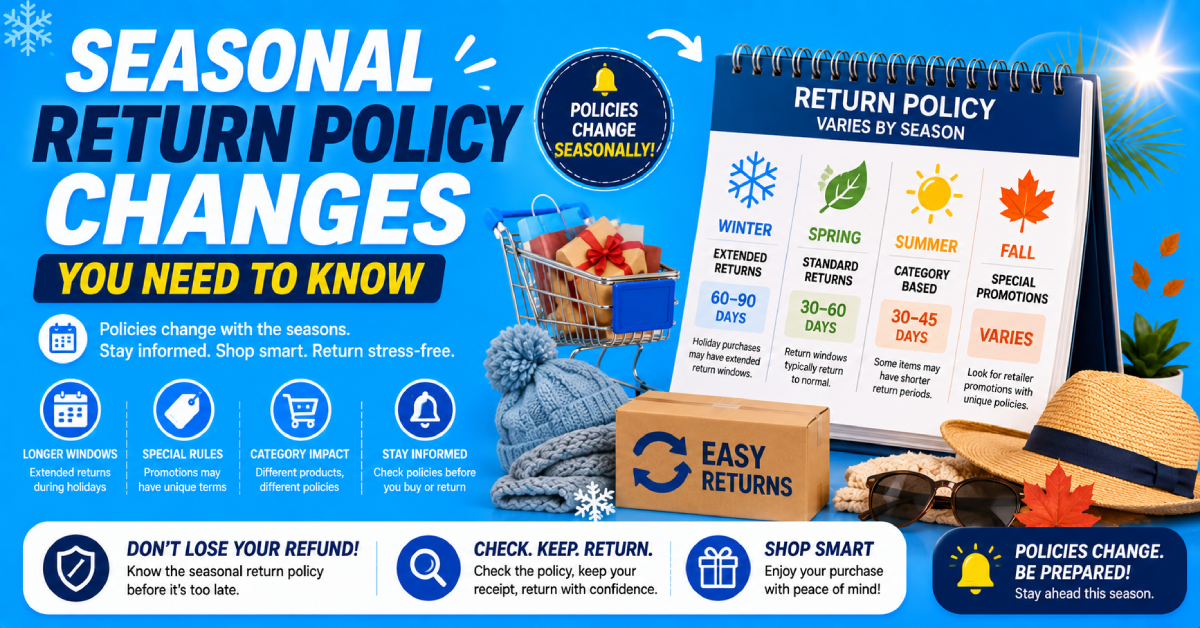
Most shoppers don’t read return policies until something goes wrong. And that’s fine — until the rules change. Seasonal return policy changes happen at almost every major retailer, and 2026 is no different. Holiday shopping has some surprises every year. One of them is return policies. Walmart changed its return policy for the holidays. Other big retailers are making changes. Before buying during a sale check the stores return policy. You want to know what to expect. What applied last year might not apply now.
This guide covers what’s shifting at Walmart, Amazon, Target, and more — extended windows, new return fees, and the exclusions that catch shoppers off guard every single season.
What Are Seasonal Return Policy Changes?
Many stores change their return rules during peak shopping times. These changes are common during holidays back-to-school shopping and big promotional events. The updates can affect how you have to return an item, how you get your refund and sometimes even add fees.
A seasonal policy might extend a standard 30-day window through late January for holiday purchases. Or it might add a return fee for online orders during high-volume periods. The seasonal policy works differently at every store — and the devil is always in the details.
Retailers use these changes to manage return volume. The holiday season generates enormous return traffic, and stores adjust their rules to balance customer flexibility with operational cost. Knowing what changed — and when — is the only way to avoid a surprise at the return counter.
What’s Actually Changing at Major Retailers in 2026?
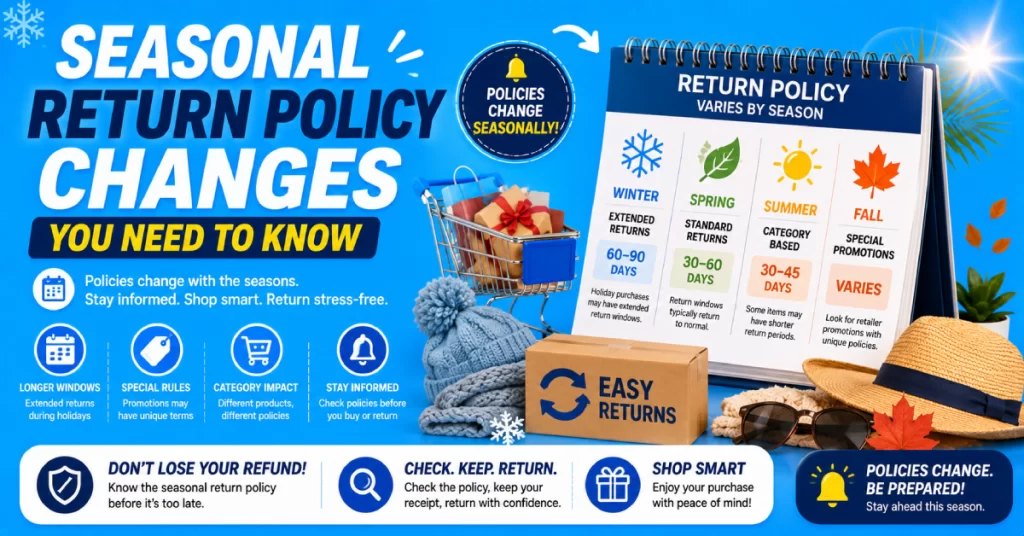
Retailers changing return policy isn’t new. But the pace and scope of changes picked up significantly heading into 2026. More stores are introducing return fees, tightening windows on specific categories, and updating their holiday terms quietly — often without much public announcement.
According to Walmart’s official newsroom, Walmart continues to adjust its seasonal return approach based on shopping volume and return rates. The changes affect both in-store and online return processes depending on the category.
Seasonal Return Policy Changes Walmart — What’s Different?
The seasonal return policy Walmart follows gives most shoppers an extended window during November and December. Items bought in that period can usually come back through late January. But the seasonal return policy changes Walmart applies aren’t uniform. Electronics, opened items, and clearance purchases often stay under the standard 30-day window regardless of the holiday extension.
The Walmart return policy covers the current rules in full — including which categories get the extended holiday window and which ones don’t. Worth reading before any major purchase during a sale event.
Seasonal Return Policy Changes Amazon — Fees and Windows
Amazon’s holiday return window typically extends through late January for items shipped between November and December. But return fees Amazon charges on certain third-party seller items have increased in recent seasons. Not every return on Amazon is free — and whether your specific item qualifies for the extended window depends on the seller and product type.
Amazon’s holiday return rules do not apply to every item. Amazon sellers can make their return rules. These rules can be different from Amazon’s rules. If you are buying from someone who’s not Amazon you should check the product page to see what return rules apply to that product.
Holiday Return Policy — Extended Windows and Hidden Exclusions
The holiday return policy at most major retailers sounds more generous than it is. Extended windows through January are real — but they come loaded with exceptions. Final sale items, opened electronics, and promotional purchases often stay under the original shorter window no matter what the holiday extension says.
Christmas return policy confusion happens every year for the same reason. Shoppers assume the holiday extension covers everything they bought in November and December. It doesn’t. Clearance items, doorbuster deals, and items explicitly marked non-returnable at checkout are excluded even when the general extension is in effect.
Return Fees Target — What’s New in 2026?
Target’s return window remains one of the more generous ones — up to 90 days on most items, with a holiday extension on top of that. But return fees Target applies for online returns have become more consistent, particularly for non-members. Target Circle members still enjoy free returns on most purchases. Non-members may see a fee deducted from mail-in refunds.
The Target return policy guide covers the current fee structure and how the holiday extension works for both members and non-members — one of the clearer policies among major retailers in 2026.
For compare store return rules across all the retailers covered here, ReturnPolicyInfo.com keeps policy details current as stores announce seasonal updates.
Seasonal Returns — How They Compare Across Retailers
| Retailer | Standard Window | Holiday Extension | Online Return Fee | Clearance |
| Walmart | 30–90 days | Through late January | Free (most items) | Final sale |
| Amazon | 30 days | Through late January | Sometimes | Final sale |
| Target | 30–90 days | Through late January | Free (Circle members) | Final sale |
| Best Buy | 15–30 days | Through mid-January | Yes (deducted) | Final sale |
| Macy’s | 30–90 days | Through late January | Free (select) | Final sale |
Best Buy’s window is the tightest here — especially on electronics, which often sit at 15 days even during the holiday season. The Best Buy return policy guide explains exactly which categories get extended and which stay under the shorter window regardless of season.
According to Consumer Reports’ holiday return policy guide, shoppers who check retailer-specific terms before buying during sale events are significantly less likely to encounter return problems. That’s not surprising — the gaps between what shoppers assume and what the policy actually says are where most issues start.
The Macy’s return policy remains one of the more flexible options for department store shoppers, with a longer base window and a holiday extension that covers most regular-priced inventory through late January.
Six Tips for Navigating Seasonal Return Policy Changes
- Check the specific holiday terms before buying — not the general policy page. Seasonal extensions have their own fine print. The main policy page rarely shows all the exclusions that apply during promotional periods.
- Screenshot your receipt and product listing at checkout. When you buy something the prices and product details and return rules might not stay the same.
- Don’t assume clearance items are covered by holiday extensions. Retailers changing return policy typically exclude clearance and final sale items from any seasonal extension, no exceptions.
- Join loyalty programs before the holiday season starts. Target Circle, Walmart+, and similar programs often unlock free returns and better holiday terms that aren’t available to non-members.
- Return in-store wherever possible to avoid return fees. Return fees Amazon and other retailers charge on mail-in returns disappear when you drop off in person. Seasonal returns at Walmart can always be processed at any location without a fee.
- Set a return deadline reminder on your phone the day your gift is opened. Holiday extensions don’t last forever. Late January is the typical cutoff — and it arrives faster than it seems.
For latest return policy updates as retailers announce seasonal changes heading into major shopping periods, bookmarking that resource saves real time when policies shift without much notice.
Conclusion
Seasonal return policy changes are happening at every major retailer — and 2026 is bringing tighter windows, more return fees, and clearer exclusions on clearance and promotional items. Knowing what changed before you shop is the only reliable protection.
Keep your receipts. Check the specific holiday terms. Return in-store when possible. Those habits work regardless of which retailer you’re dealing with or what seasonal policy changes they’ve made.
Found this helpful? visit Return Policy Info for more — return policy guides for hundreds of major retailers, plain language, updated as policies change year-round.
Frequently Asked Questions
What are seasonal return policy changes?
Stores change their return rules during times. These changes can affect how you have to return things and what fees you pay. During holidays stores might let you return things longer. They might be stricter on some things. Check the rules for what you bought.
Does the holiday return extension cover all items?
No. Holiday extensions cover most regular-priced inventory but almost always exclude clearance items, final sale products, opened electronics, and promotional purchases. This is the most common holiday return surprise. The general policy page may not have exceptions.
Is Walmart changing its return policy for the 2026 holiday season?
Yes Walmart changes its return policy every year. If you buy something in November and December you usually have until January to return it.. Things like electronics and clearance items usually do not get this extra time.
Does Amazon charge return fees during the holiday season?
Sometimes. Amazon’s holiday extension covers Amazon-fulfilled items, but return fees apply on certain third-party seller returns. The fee amount varies by seller. Free return shipping isn’t guaranteed on every item even during the holiday window. Always check the individual product listing’s return policy — especially on marketplace items — before assuming the Amazon-wide terms apply.
How do seasonal returns at Walmart work without a receipt?
Seasonal returns at Walmart without a receipt are handled at the associate’s discretion. Walmart can sometimes verify the purchase through your credit card or Walmart+ account. If it can’t be verified, store credit at the lowest recent price is the typical outcome. Keeping your receipt or order confirmation email prevents this situation entirely.
Why are retailers adding more return fees in 2026?
Return volume has increased significantly in recent years, raising operational costs for retailers. Adding return fees — especially on online mail-in returns — helps offset those costs. Most in-store returns remain free. Joining loyalty programs like Target Circle or Walmart+ often unlocks fee-free returns that aren’t available to general shoppers during seasonal return periods.
Found this helpful? visit Return Policy Info for more — return policy guides for hundreds of major retailers, plain language, updated as policies change year-round.