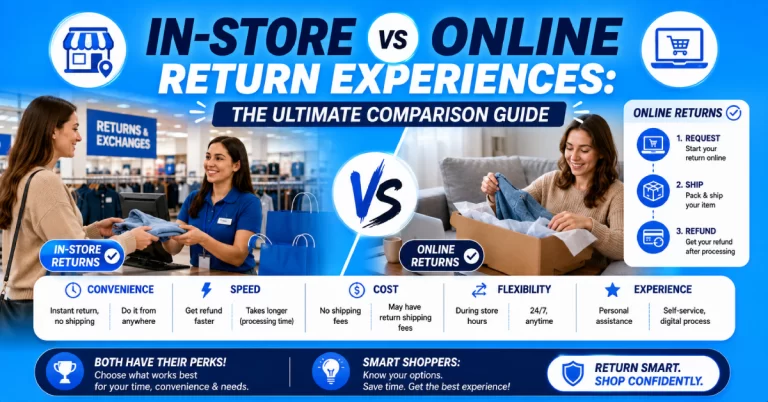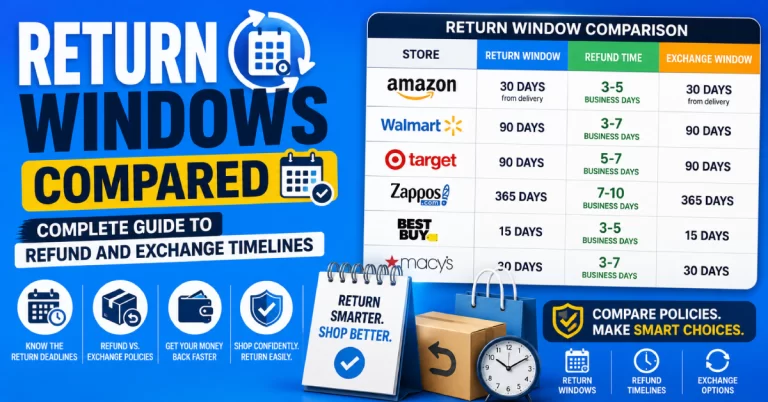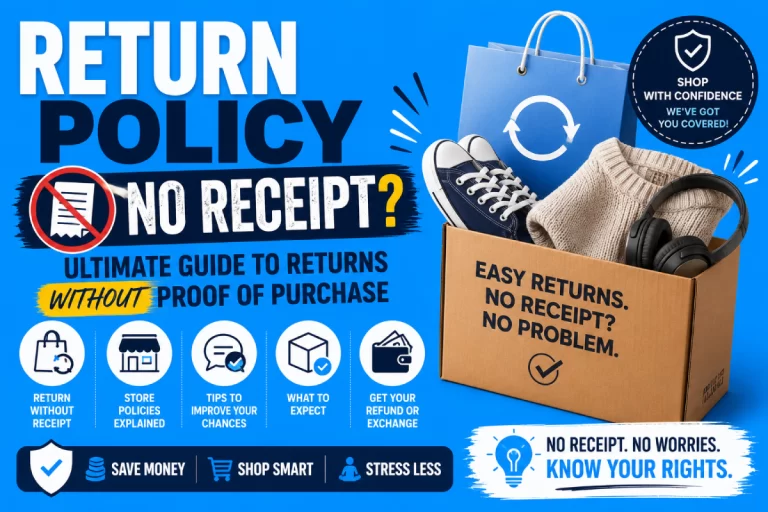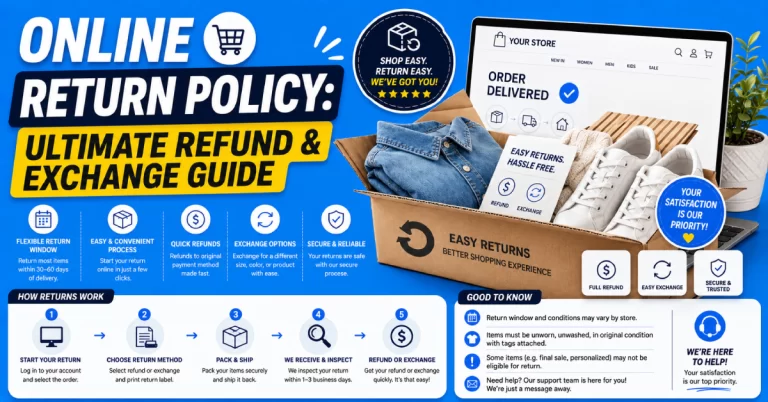
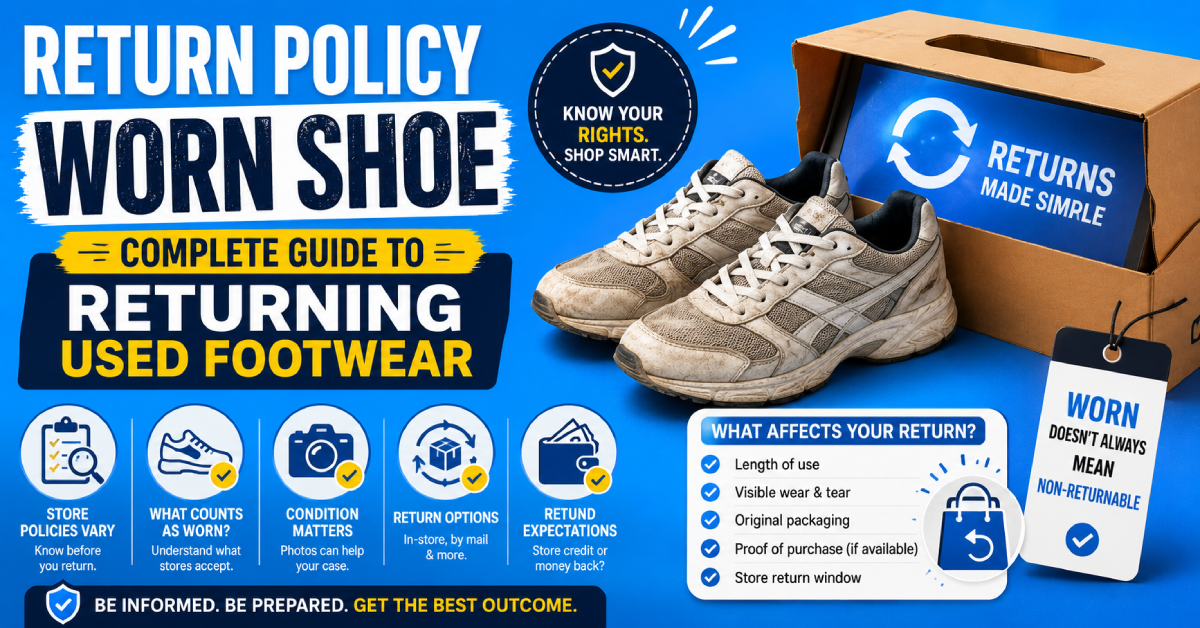
Wore a pair of shoes once and now they don’t feel right? Maybe the arch support is off, or the sizing runs differently than expected. Here’s the hard truth: most stores won’t take them back. The return policy worn shoes situation is one of the trickiest in retail — and walking up to the counter without knowing the rules first usually ends badly. This guide breaks down exactly which stores accept worn shoes, which ones don’t, and what your options are when defects show up after wearing them. For return rules at other major retailers, our refund and exchange details hub has everything covered.
Return Policy Worn Shoes — Quick Overview
| Store | Accepts Worn Shoes? | Defective Exception? | Notes |
| Nike | Yes (60 days) | Yes | Worn for testing counts as acceptable |
| Costco | Yes (unlimited) | Yes | Most lenient policy in retail |
| Nordstrom | Case by case | Yes | No hard deadline; condition judged by staff |
| DSW | No | Yes (defects only) | Must be unworn for standard returns |
| Zappos | No | Yes | 365-day window but unworn only |
| Foot Locker | No | Yes | Unworn required; defects handled separately |
| Walmart | No | Limited | Standard condition rules apply |
| Target | No | Limited | Unworn and original packaging required |
| Macy’s | No | Yes | Defective claims via customer service |
| DTLR | No | Yes | Unworn and tagged; defects need documentation |
What Is the Return Policy for Worn Shoes?
The return policy worn shoes rules vary wildly across retailers. Most stores require shoes to be unworn and in original condition to qualify for a standard return. But a few — most notably Nike and Costco — allow returns on shoes that have actually been worn.
The key distinction is why the shoes are being returned. Normal wear doesn’t qualify at most stores. But if the sole separates, stitching fails, or the shoe is structurally defective after being worn, most retailers have a separate defective product process — even when the standard return window has closed.
Knowing which category your situation falls into is what determines your options.
Stores That Accept Worn Shoes — and How It Works
Most people assume worn means rejected. That’s mostly true. But a handful of retailers genuinely allow it — and understanding their rules gives you real options.
Nike Return Policy Worn Shoes
Nike is one of the few major brands that explicitly allows worn returns. The Nike return policy worn shoes gives customers 60 days to return footwear — even if it’s been worn outside. Nike frames this as a trial period. You’re supposed to actually wear the shoes to know if they work for you.
Shoes need to be in reasonable condition. Visibly abused or heavily worn pairs may still get rejected. But light wear — a few runs, a few workouts — falls within what Nike accepts. The return can happen in-store or by mail.
According to Nike’s official return policy page, members get free return shipping and an extended 60-day window to wear and assess the product before deciding.
For comparison, the DSW shoe return policy takes the opposite approach — unworn is required, with defects handled as a separate case entirely.
Can You Return Worn Shoes to Costco?
Yes — and Costco is the most generous of all. Can you return worn shoes at Costco? Absolutely. One of the things about Costco is that they let you return most things even if you have used them. This includes shoes. Most of the time you can return things whenever you want there is no rush.
The catch: electronics have a 90-day limit, and cigarettes and diamonds are excluded. But shoes? You can return a pair you’ve worn for months if they didn’t hold up. Bring your membership card and the transaction gets pulled from your account directly.
The Costco return policy guide breaks down which product categories fall outside the unlimited window and how the membership lookup works at the service desk.
Nordstrom — Judgment-Based Approach
Nordstrom doesn’t publish a hard rule on worn shoes. Staff assess each return on its own merits. The shoe return policy after wearing at Nordstrom depends on the condition of the shoe, how long ago it was purchased, and your purchase history.
Lightly worn shoes returned within a reasonable timeframe generally get accepted. Heavily worn pairs purchased a long time ago are harder sells. Nordstrom tracks return behavior, and customers with frequent returns may receive less flexibility over time.
Stores That Don’t Accept Worn Shoes — Except for Defects
Most retailers draw a clear line. Worn means rejected. But the defective product path is still open — and that’s where documentation makes all the difference.
DSW Return Policy Worn Shoes
DSW is firm. Standard returns require unworn shoes in original packaging. The dsw return policy worn shoes doesn’t allow regular returns once the shoes have been outside. If there’s a defect — a sole separating, a zipper breaking, stitching coming apart — that’s a different conversation.
Contact DSW customer service before going to the store. Take photos of the defect on the day you notice it. Defective claims at DSW can be accepted outside the standard 60-day window in some cases, but the documentation has to be solid.
You can compare store return rules across other shoe retailers to see how defective claims differ from standard returns at each chain.
Can I Return Used Shoes to Walmart or Target?
Generally no. Can I return used shoes? The answer at both Walmart and Target is that shoes need to be in original, unworn condition. Worn pairs without a documented defect will be turned away.
Target’s system can look up purchases through linked accounts, but that doesn’t change the condition requirement. And at Walmart, worn shoes without a defect claim rarely make it through the standard return process.
The Walmart refund guide and Target store return information both outline the condition requirements clearly — worth reading before you attempt a return on worn footwear at either store.
Return Policy for Damaged Shoes — Is It Different?
Yes. Return policy for damaged shoes — meaning manufacturing defects, not damage from use — follows a different path at most stores. This isn’t about wear. It’s about product failure.
Document the defect immediately. Photo, date, purchase proof. Then contact customer service before heading to the store. Showing up unannounced with a worn, defective pair and no documentation makes the process harder than it needs to be. Most stores have a process for this — it just runs separately from the standard return line.
The Macy’s refund and exchange guide outlines how their defective product process works and what to bring to make the claim move faster.
5 Tips for Returning Shoes — Worn or Not
- Try shoes indoors only until you decide. Pavement marks end standard returns at almost every store. Carpet and hardwood only — until you’re sure you’re keeping them.
- Know which stores allow worn returns before buying. Nike and Costco give you real trial periods. DSW, Foot Locker, and Walmart don’t. Match the store to your purchase habits. Browse helpful shopping guides to compare policies across footwear retailers before you buy.
- Document defects the day you notice them. For the return policy for damaged shoes path, photos taken immediately carry far more weight than ones taken later. Date, defect, and original purchase proof all matter.
- Contact customer service before going in-store. Defective claims go smoother when customer service already has a record of the issue. Don’t show up cold.
- Keep the original box. Even at stores that allow worn returns, having the original box removes friction. It signals the return is legitimate — not an attempt to offload a heavily used pair. The DSW return window guide specifically notes that original packaging helps in disputed condition cases.
Conclusion
The return policy worn shoes landscape splits clearly: a few stores like Nike and Costco allow worn returns by design, while most others reject them unless there’s a documented defect. Before you go to the store, figure out if you’re making a trial return or a defect claim. This one detail can change everything. If you see a problem, take photos. Document it right away. Try shoes indoors if you can and always pick retailers whose policies fit how you shop. For info on shoe return rules and defect claims visit Return Policy Info.
Found this helpful? Check more return policy guides.
Frequently Asked Questions
Can you return worn shoes to most stores?
Most stores do not accept worn shoes for standard returns. The return policy worn shoes rule at places like DSW, Walmart, Target, and Foot Locker requires unworn conditions. Nike and Costco are the notable exceptions — both allow returns on shoes that have been worn, within their respective return windows.
What is Nike’s return policy on worn shoes?
Nike explicitly allows worn returns within 60 days of purchase. The Nike return policy worn shoes covers shoes that have been worn for testing purposes — runs, workouts, or everyday use. Shoes in reasonable condition qualify. Heavily damaged pairs may be rejected. Returns can be made in-store or by mail with free shipping for members.
Can I return worn shoes to DSW?
No. DSW requires shoes to be unworn and in original packaging for standard returns. The dsw return policy worn shoes doesn’t include regular wear. Defective shoes — structural failures like sole separation — may be handled separately. Contact DSW customer service with photos before attempting a defective claim at the store.
What if my shoes are defective after wearing?
Defective shoes follow a different process than standard returns. Contact customer service first, take photos of the defect immediately, and bring proof of purchase. The return policy for damaged shoes at most major retailers handles manufacturing defects separately from standard condition requirements — even after the normal return window closes.
Does Costco accept worn shoe returns?
Yes. Costco’s unlimited return policy covers most merchandise including footwear that has been worn. There’s no set deadline for shoe returns at Costco. Bring your membership card — purchases are looked up directly from your account. This makes Costco one of the most flexible retailers for worn shoe returns in the US.
What’s the difference between worn and damaged shoe returns?
Worn returns are standard condition-based returns where the shoe has been used. Most stores reject these. Damaged returns involve manufacturing defects — sole separation, stitching failure, structural breakdown. The return policy worn shoes rule blocks regular wear returns. But defective product claims follow a separate path and often succeed even after the standard return window has closed.