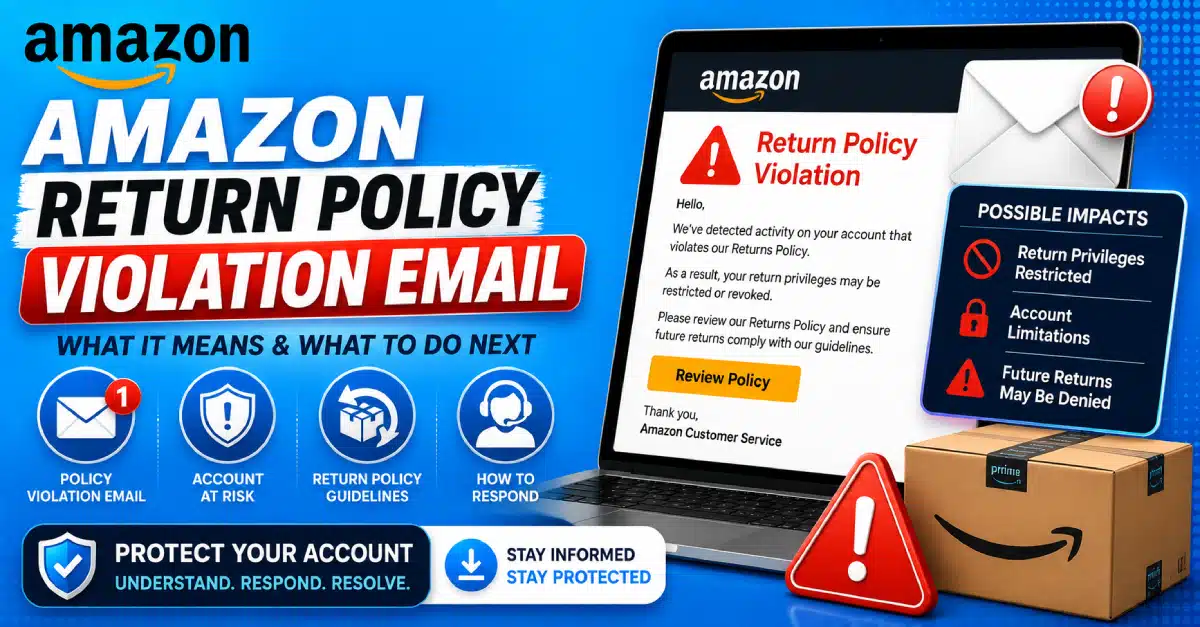
Getting one of those Amazon warning emails can honestly feel stressful the first time. A lot of shoppers immediately think their account is about to get banned forever. Usually, that is not what happens right away. In many cases, Amazon is simply warning customers that their recent return activity looks unusual compared to normal buying behavior.
If you searched Amazon Return Policy Violation Email What Should I Do, the most important thing is not to ignore the message. Review your recent returns, avoid making excessive refund requests for a while, and contact support calmly if something looks incorrect. Many shoppers avoid bigger account problems simply by responding carefully instead of panicking. It also helps to understand general return policy information before making repeated online returns.
The first thing shoppers should understand
A lot of these emails are automated. That surprises people because the wording sometimes sounds extremely serious. Refund requests, return habits, and account activity are all part of the patterns Amazon may track internally.
A small number of returns generally does not cause any issues with the account. Problems tend to happen when multiple returns happen close together, especially for expensive products like electronics, gaming devices, or designer items.
Why Amazon sends these warning emails
Amazon wants to reduce return abuse. That does not always mean the customer intentionally did something wrong though.
Sometimes shoppers trigger warning emails because of:
- repeated “item damaged” claims
- too many refunds within weeks
- returning heavily used products
- mismatched returned items
- unusually high-value return activity
According to Amazon’s official returns page, the company reviews return activity to maintain fair use of the platform.
Most shoppers see the email as a caution message, not an instant account penalty.
Most people panic too quickly
Honestly, people often assume the account will disappear overnight. Usually, Amazon gives warnings before stronger restrictions happen.
The smarter approach is slowing down returns temporarily and reviewing whether recent refunds may have looked suspicious from Amazon’s side. Sometimes perfectly honest shoppers accidentally create unusual patterns without realizing it.
The Amazon Return Policy itself is fairly flexible compared to many stores, which is one reason the company watches for abuse more aggressively now.
What usually triggers a violation warning
There is not always one single reason behind the email. Sometimes several small behaviors together create a pattern Amazon flags automatically.
Return activity tends to grow pretty quickly during major sales events, something many buyers do not think about at first.
Too many refunds in a short period
Frequent refunds are probably the most common trigger. Someone ordering ten similar products and returning eight of them repeatedly may eventually attract attention from Amazon systems.
That does not mean comparison shopping is banned. The issue usually becomes frequency and consistency over time.
A lot of online retailers monitor this now. People comparing retail platforms sometimes read the Best Buy return policy guide because electronics-heavy retailers often track return behavior more carefully.
Wrong items and damaged return problems
This area creates problems surprisingly often.
If Amazon receives:
- empty boxes
- incorrect products
- heavily damaged returns
- missing accessories
- signs of excessive use
the account may get reviewed more closely afterward.
Sometimes these situations are accidental. A family member may pack the wrong item, or warehouse confusion may happen during busy seasons. Still, repeated incidents raise red flags.
What to do immediately after getting the email
The first step is honestly simple. Slow down. Do not send angry emails immediately or open multiple support chats at once.
Most shoppers get better results by reviewing their account calmly first.
Check your recent return history first
Look through your recent orders and refund activity carefully. Ask yourself:
- Have you returned many items recently?
- Were several items marked damaged?
- Did any refunds involve expensive electronics?
- Were all items returned correctly?
Sometimes customers realize the pattern themselves once they review everything together.
For shoppers wanting broader refund and exchange details, many major retailers now use automated systems to monitor unusual refund behavior.
Contacting Amazon without making things worse
If the email seems incorrect, contact Amazon politely and briefly explain the situation. Long emotional messages usually do not help much.
A calm explanation works better:
- mention incorrect flags
- clarify return reasons
- confirm returned items
- ask for account review if necessary
Customer support representatives generally respond better when the conversation stays practical instead of confrontational.
The mistakes buyers often do not notice
A lot of shoppers accidentally create account issues without realizing certain behaviors look suspicious from Amazon’s side.
That part catches people off guard.
Returning heavily used products
Some buyers treat Amazon almost like a temporary rental service without realizing how risky that looks.
Returning:
- worn clothing
- opened collectibles
- used electronics
- partially consumed items
too often can eventually trigger account reviews.
Shoppers comparing store flexibility sometimes check the Walmart return policy because different retailers handle opened products differently.
Refund timing confusion
Refund timing also creates misunderstandings.
People sometimes expect instant refunds after dropping packages at shipping centers. In reality, Amazon often waits until the item reaches inspection facilities first.
Busy shopping periods can slow everything further. Holiday returns especially tend to create delays and extra verification checks.
Can Amazon ban or limit your account?
Yes, but usually not immediately after a single warning email.
Amazon often starts with alerts before stronger restrictions happen. Still, repeated policy violations can eventually lead to:
- denied refunds
- slower return approvals
- account restrictions
- permanent account closure
Temporary restrictions sometimes happen
Some shoppers notice smaller limitations first. For example, certain return methods may disappear temporarily or refund approvals may take longer than normal.
That does not automatically mean the account is permanently banned. Sometimes Amazon simply increases monitoring after unusual activity.
People researching broader retailer policies sometimes browse helpful shopping guides because return systems across major stores have become stricter during the last few years.
How Amazon compares with other retail return systems
Compared to physical stores, Amazon handles enormous return volume every single day. Companies handling that much activity almost have no choice but to rely on automated monitoring tools.
Physical stores keep track of returns. Online platforms watch customer behavior closely because they have more fraud to deal with.
Why online retailers track returns closely
Online returns involve shipping costs, inspection costs, resale losses, and fraud concerns. A customer returning large numbers of expensive items creates major costs for retailers.
According to Best Buy’s official return policy page, many retailers now apply stricter monitoring to electronics and high-value products.
So while Amazon feels stricter lately, it honestly is not the only company moving in that direction.
What shoppers should realistically expect moving forward
Amazon Return Policy Violation Email What Should I Do concerns usually calm down once return activity becomes more normal again. Many shoppers never hear from Amazon a second time after adjusting their return habits.
The safest approach is simple:
- avoid unnecessary returns
- package items carefully
- return correct products
- keep refund requests reasonable
- communicate calmly with support
Most regular shoppers never run into major account restrictions unless unusual patterns continue repeatedly.
Conclusion
Amazon Return Policy Violation Email What Should I Do worries are understandable, especially when the warning sounds serious. In a lot of situations, the message is there to caution users rather than punish them right away.
People often get results when they check their return history and talk to customer support in a respectful manner. Refund monitoring has become much more common, particularly for expensive electronics and repeated claims.
It is helpful to review return policies of time if you frequently order online or return products often. This way you will know what to expect from the store where you shop online.
Frequently Asked Questions
Does an Amazon return violation email mean my account is banned?
Usually no. Most warning emails are meant as alerts first, although repeated issues can eventually lead to restrictions if patterns continue.
Can I still place orders after getting the warning email?
In many cases yes. Most shoppers still keep full account access unless Amazon applies additional restrictions later.
Amazon Return Policy Violation Email What Should I Do if the warning seems wrong?
Review your recent returns carefully first, then contact Amazon support calmly with clear details if you believe the warning was incorrect.
Do too many refunds trigger Amazon warnings?
One of the more common reasons for account checks is repeated refunds within a short span of time.
How long does Amazon keep monitoring return activity?
Amazon does not publicly share exact timelines, but repeated patterns over time appear to matter more than isolated single returns.
Can damaged return claims create problems?
Sometimes yes. Frequent damaged-item reports may increase account review activity, especially for expensive products or electronics.
Keeping return activity reasonable and double-checking packages before shipping them back usually prevents most account warning issues later.